Rebuilding gut flora after a course of antibiotics is essential for restoring your overall body health and digestive balance. As a nutritional health advocate at Kezia Foods, I have seen so many people celebrate overcoming a tough bacterial infection, only to find themselves dealing with sudden bloating, irregular bowel movements, and low energy levels just days later. If this sounds familiar, please do not panic. Your body is simply recovering from a massive internal shift, and with the right strategy, you can get your system back on track perfectly.
Antibiotics are undeniably miraculous life-saving medications. When you have a severe infection, they step in like elite soldiers to wipe out harmful pathogens. However, these medications are not precise laser beams. They act more like a wide broom, clearing out your beneficial, health-promoting gut microbes alongside the bad bacteria.
This post-medication clearance creates a temporary state called dysbiosis, which means your digestive ecosystem is temporarily out of balance. To help you heal, I have put together this comprehensive, dietitian-approved recovery roadmap designed specifically for our community.
Why Your Post-Antibiotic Microbiome Needs Active Care
Your gastrointestinal tract is home to trillions of living microorganisms that form a complex ecosystem. This ecosystem controls everything from your daily metabolic rate and nutrient extraction to your immune defense and emotional mood stabilization. When a strong prescription clears out large portions of this microbial population, it leaves empty physical spaces along your intestinal walls.
If you leave these spaces completely empty, opportunistic, less desirable microbes can move in and multiply rapidly. This is precisely why many individuals experience antibiotic-associated diarrhea or persistent stomach cramps after completing their medical treatments.
According to published clinical updates from Harvard Health Publishing, the standard human microbiome can take anywhere from several weeks to six full months to fully recover its original diversity naturally. However, when you actively focus on rebuilding gut flora after a course of antibiotics, you provide the exact biological components your body needs to shorten this recovery timeline dramatically and protect your cells from long-term digestive vulnerabilities.
Phase One: Re-Seeding Your Gut with Live Probiotics
The first step in your recovery plan is to reintroduce active, friendly bacteria into your digestive tract. Think of your digestive system as a fertile garden that has just been completely cleared ; your immediate job is to plant fresh, high-quality seeds. While many people automatically run to the pharmacy for expensive industrial pills, my approach always favors whole, living fermented foods first. Fermented dairy provides a natural, highly protective environment that helps beneficial bacteria pass through your stomach acid completely unharmed.
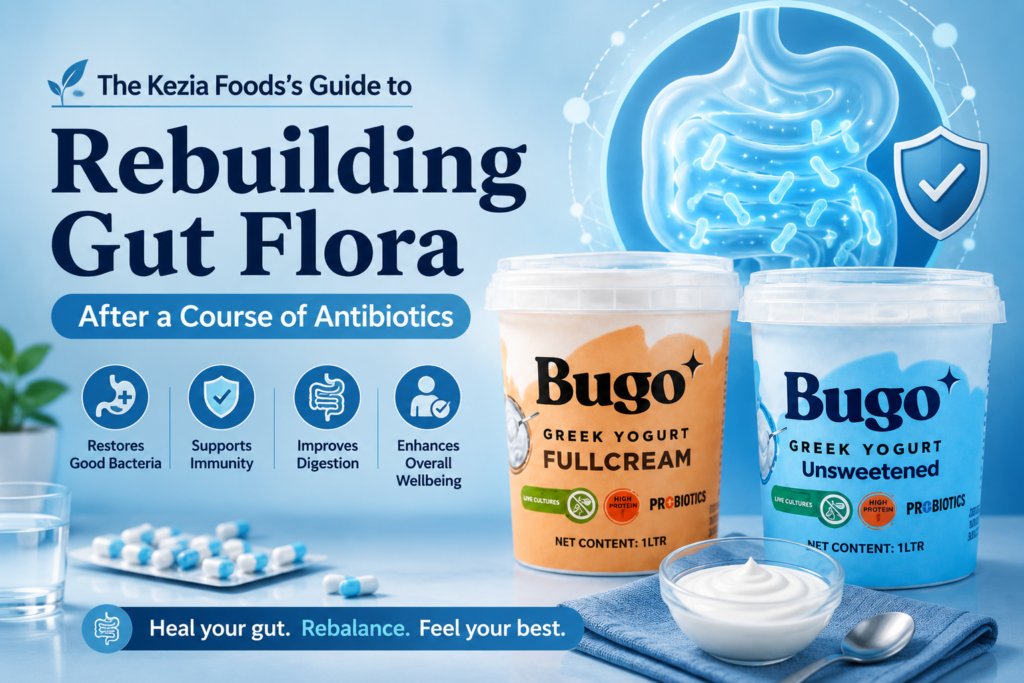
When looking for the ideal food source, your absolute best option is a naturally strained dairy option. Using a high-quality product like Bugo Greek Yogurt provides a dense concentration of protein and beneficial fats that serve as a physical shield for the active microbes.
If you are looking for the best healthy yogurt in Nigeria to jumpstart your recovery, you must ensure that the label explicitly mentions it contains live and active bacterial cultures. These live strains will settle into your digestive tract, immediately lowering the local pH to create an unwelcoming environment for harmful invaders.
Phase Two: Fueling Growth with Prebiotic Fibers
Planting the seeds is only half the battle. Once the friendly bacteria arrive in your digestive tract, they require the proper fuel to survive, multiply, and form permanent, thriving colonies. This is where prebiotics come into play. Prebiotics are specific types of non-digestible plant fibers that humans cannot break down, but our beneficial microbes absolutely love to eat.
When you are intentionally rebuilding gut flora after a course of antibiotics, you should gradually introduce these premium prebiotic fiber sources into your daily meals:
-
Traditional Rolled Oats: Oats are packed with beta-glucan, a highly soluble fiber that speeds up tissue healing and acts as an exceptional fuel source for Bifidobacterium strains.
-
Slightly Unripe Bananas: These contain high levels of resistant starch, which passes smoothly through your small intestine to feed the hard-working microbes living in your lower colon.
-
Garlic, Onions, and Leeks: These aromatic ingredients are incredibly rich in inulin, a powerful prebiotic fiber known to boost beneficial microbial activity significantly.
If you want to make this step incredibly easy and highly enjoyable, you should focus on crafting nutrient-dense breakfasts. Combining a rich, probiotic strained yogurt with an artisanal oat and seed granola is one of the most effective healthy breakfast ideas for Nigerian families looking to protect their wellness. This functional food combination creates a powerful synbiotic effect, meaning you are delivering the live bacteria and their favorite food source together in a single delicious bowl.
Essential Gut Health Tips for Nigerians Facing Post-Medication Recovery
Recovering your digestive strength requires a holistic approach that fits seamlessly into your regular daily routine. To help you navigate this period smoothly, here are practical gut health tips for Nigerians that will accelerate your healing process:
1. Give Your Digestion a Head Start
During the first two weeks after completing your medication, your stomach lining might still be slightly sensitive. I highly recommend enjoying your meals in a calm, relaxed environment. Chew your food thoroughly to let your saliva begin the breakdown process early, which minimizes the mechanical workload placed on your recovering digestive tract.
2. Prioritize Deep Hydration
Water is the foundational element of healthy digestion. It keeps your intestinal walls properly lubricated and helps flush out the metabolic waste material left behind by dead bacteria. Make it a strict habit to drink plenty of clean, filtered water throughout the day, particularly in our warm tropical climate.
3. Step Away from Highly Processed Sugars
Unfriendly microbes and yeast species thrive on refined sugars and heavily processed flours. Eating too many sweet pastries or commercial carbonated drinks during your recovery can feed the wrong organisms, slowing down your healing. Stick to wholesome, natural foods to give your friendly bacteria the competitive advantage they need to win back control.
Phase Three: Strengthening Your Intestinal Barrier
Beyond just balancing your bacterial populations, a comprehensive recovery plan must also look at the physical health of your intestinal lining. The cells that line your digestive tract can experience minor irritation from infections and heavy medications. To repair this delicate barrier, your body requires specific amino acids and micronutrients.
You can support this tissue repair by incorporating clean, lean proteins into your afternoon and evening meals. Dietary collagen, which you can easily get from slow-cooked bone broths, provides the foundational building blocks like glycine and glutamine that your body uses to seal and strengthen the gut barrier.
Pairing these protein sources with vitamin C from fresh local citrus fruits or dark leafy greens maximizes your body’s natural collagen synthesis, ensuring your internal defense systems are fully restored.
Where to Source Real, Nutrient-Dense Fermented Foods
The absolute key to successful recovery is consistency and quality. You cannot expect major health results from commercial treats that are loaded with artificial sweeteners, chemical preservatives, and excessive refined sugars. To truly succeed at rebuilding gut flora after a course of antibiotics, you need authentic, expertly crafted fermented options that respect traditional production methods.
If you are wondering where to buy authentic Greek yogurt in Lagos or want to locate a premium batch of artisanal granola, we have made it incredibly simple for you at Kezia Foods. Our signature Bugo Greek Yogurt is meticulously strained to maintain its signature thick texture, satisfying creaminess, and dense probiotic count. We avoid all artificial additives, giving you a completely pure, nourishing product that serves as the perfect cornerstone for your daily wellness routine.
Final Thoughts from My Kitchen to Yours
Your body has an incredible, built-in ability to heal itself when it is given the proper tools. Completing a heavy prescription might leave your system feeling temporarily depleted, but it also represents a fresh opportunity to build a stronger, more resilient microbiome than ever before.
By consistently re-seeding your system with live cultures, feeding those cells with premium prebiotic grains, and supporting your body with wholesome local ingredients, you are taking full control of your long-term vitality. Listen to your body, celebrate the small improvements each day, and let us continue to prioritize genuine nourishment.