
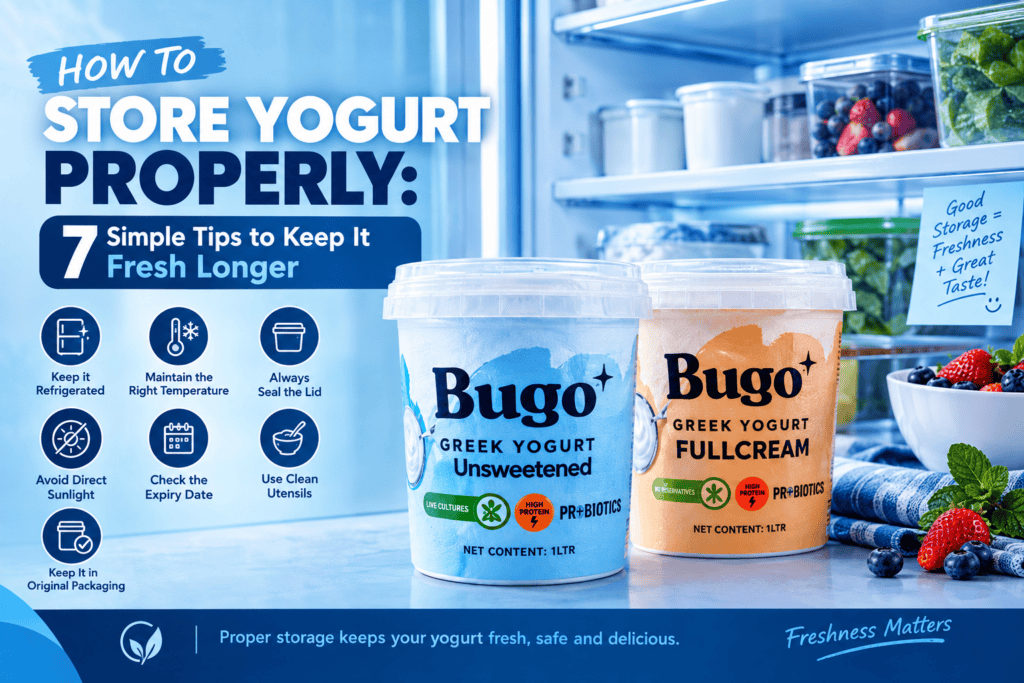
Have you ever opened a tub of yogurt only to find it watery, sour-smelling, or oddly separated days before you expected it to go bad? You are not alone. At Kezia Foods, this is one of the most common questions our health-conscious community asks us, and honestly, it usually comes down to one thing: storage.
Yogurt is a living food. The same probiotic cultures that make it so good for your gut health are also sensitive to temperature, air, and handling. Store it the wrong way, and it spoils faster than it should. Store it correctly, and your favourite tub of Bugo Greek Yogurt can stay fresh, creamy, and safe to enjoy for as long as possible. Here are seven simple ways to make that happen.
1. Keep It at the Right Temperature
Yogurt needs to stay consistently cold, ideally at 40°F (4°C) or below, to slow down bacterial growth. According to the FDA’s food safety guidance, keeping refrigerated foods below this temperature is one of the most effective ways to prevent spoilage. Avoid leaving yogurt out on the counter for long stretches, especially in Lagos heat, where warm temperatures can speed up bacterial activity within minutes.
2. Store It on a Shelf, Not the Fridge Door
It is tempting to toss your yogurt into the door compartment for easy access, but that is actually the warmest part of your fridge because of how often it opens and closes. Instead, store yogurt on a middle or lower shelf, where temperatures stay more stable throughout the day.
3. Always Reseal the Lid Tightly
Air exposure introduces bacteria and speeds up spoilage. After every use, press the lid down firmly or transfer the yogurt to an airtight container if the original lid no longer seals properly. This single habit can noticeably extend freshness.
4. Use a Clean, Dry Spoon Every Time
Double-dipping with a used spoon, or one with leftover food residue, introduces new bacteria into the tub each time. Make it a habit to use a clean, dry spoon whenever you scoop yogurt, and never dip a spoon you have already put in your mouth back into the container.
5. Don’t Return Unused Portions to the Original Container
If you are serving yogurt for a smoothie, parfait, or recipe, scoop out only what you need into a separate bowl. Returning leftover, potentially contaminated portions back into the main tub can shorten the shelf life of the entire batch.
6. Check the Best-Before Date, But Trust Your Senses Too
Dates on packaging are a helpful guide, but they are not the final word. The USDA’s FoodKeeper guidance recommends consuming refrigerated yogurt within one to two weeks of purchase for the best quality and safety. Beyond the date, always look out for changes in smell, texture, or appearance, such as mould, an overly sour odour, or excess liquid separation, as these are signs it is time to let it go.
7. Freeze It If You Won’t Finish It in Time
If you know you won’t get through a tub before it expires, freezing is a great option. While freezing can slightly change the texture, making it a little grainier once thawed, it is a smart way to reduce food waste, especially with unsweetened or plain yogurt used for cooking and baking. The CDC’s food safety resources note that keeping perishable dairy consistently frozen or refrigerated is key to preventing the growth of harmful bacteria.
Why Proper Storage Matters More With Probiotic Yogurt
At Kezia Foods, our Bugo Greek Yogurt is packed with live probiotic cultures that actively support your gut health. Poor storage does not just affect taste and texture, it can also reduce the effectiveness of these beneficial bacteria before they ever reach your gut. If you are curious about how those live cultures work in the first place, we’ve also explored whether drinking yogurt is genuinely good for you and broken down the real differences between Greek yogurt and regular yogurt if you are still deciding which type suits your goals.
Proper storage also matters if you are rebuilding your gut health after being unwell. If you have recently completed a course of antibiotics, our guide on rebuilding gut flora after antibiotics explains why keeping your probiotic sources fresh and potent is especially important during recovery.
Final Thoughts
Yogurt does not have to go bad before its time. With a few consistent habits, keeping it cold, sealing it properly, using clean utensils, and paying attention to both the label and your senses, you can enjoy every spoonful at its freshest. The next time you pick up a tub of Bugo Greek Yogurt, these simple steps will help you get the most out of every serving, both in taste and in nutrition.