
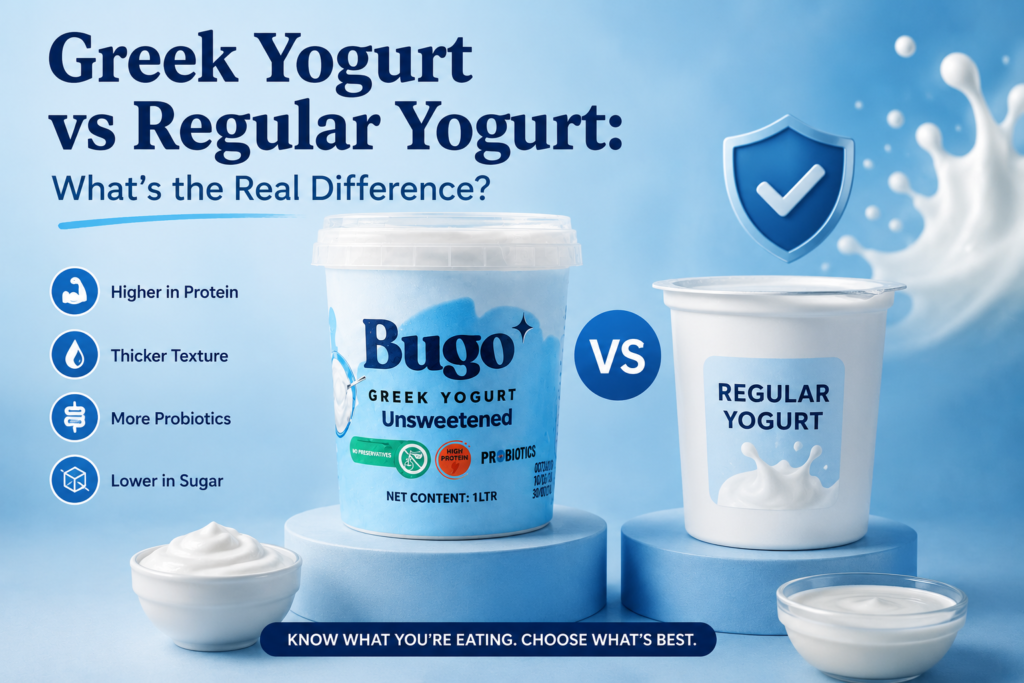
When it comes to Greek yogurt vs regular yogurt, I get asked this question almost every week by customers who walk into our store or message us on social media wondering which one they should actually be buying. And honestly, I don’t blame them. Walk into any supermarket in Lagos, Abuja, or Port Harcourt today and you’ll find shelves packed with different yogurt brands, some labeled Greek, some just plain yogurt, and a few that don’t even clarify what they are. As someone who has spent years in the food business here at Kezia Foods, I want to break this down for you in the simplest way possible, using facts, not marketing hype.
Let me start by saying this clearly. Both types of yogurt come from the same basic ingredients: milk and live bacterial cultures. The magic happens during the fermentation and straining process, and that’s really where the whole Greek yogurt vs regular yogurt debate begins.
What Makes Greek Yogurt Different From Regular Yogurt
Regular yogurt is made by heating milk, adding beneficial bacteria, and allowing it to ferment until it thickens naturally. It keeps most of its liquid whey, giving it that smooth, pourable consistency many of us grew up eating with cereal or fruit.
Greek yogurt, on the other hand, goes through an extra straining step. The whey and excess liquid are removed, sometimes through cloth straining and sometimes with modern centrifuge equipment. This is exactly why Greek yogurt feels thicker, creamier, and slightly tangier on the tongue compared to regular yogurt. In fact, both regular and Greek yogurt are made with the same main ingredients, including fresh milk and starter cultures, yet their taste and nutrients differ due to how they’re made. healthline
I personally find this straining process fascinating because it doesn’t just change the texture, it changes the entire nutritional profile of the product. That’s the real heart of the Greek yogurt vs regular yogurt conversation, and it’s something I think every health conscious Nigerian should understand before choosing which one belongs in their fridge.
Greek Yogurt vs Regular Yogurt: Comparing The Nutrition
If you’re someone who reads nutrition labels like I do, this is where things get interesting. Greek yogurt is generally the winner when it comes to protein content. According to nutrition experts, Greek yogurt typically contains 15 to 20 grams of protein per cup, making it an excellent choice for those looking to increase their protein intake, while regular yogurt averages about 8 to 13 grams per cup. That’s almost double, and if you’re someone trying to build muscle, recover after a workout, or simply stay fuller for longer, this difference matters a lot. HEAL United
But before you assume Greek yogurt wins in every category, hold on. Regular yogurt actually beats Greek yogurt when it comes to calcium. Because straining removes a good portion of the liquid whey, it also removes some calcium along with it. Greek yogurt generally provides about 150 to 200 milligrams of calcium per cup, while regular yogurt offers around 300 to 450 milligrams. If bone health is a top priority for you or your family, especially for growing children or older relatives, regular yogurt might actually be the smarter pick. HEAL United
Carbohydrates and sugar also differ noticeably. Because the straining process removes lactose along with the whey, Greek yogurt contains about half the carbs and sugar found in regular yogurt while packing almost twice as much protein. So if you’re watching your sugar intake, or you’re managing something like prediabetes, Greek yogurt tends to be gentler on your blood sugar levels compared to the regular option. Healthline
I always tell my customers this: neither type is inherently bad. They’re just built differently, and your choice should depend on what your body actually needs.
Which One Tastes Better
This part is honestly subjective, and I won’t pretend otherwise. From my own experience tasting both varieties over the years, Greek yogurt has a noticeably tangier, almost sour undertone, while regular yogurt tastes milder and slightly sweeter naturally. Some people describe Greek yogurt as having a thicker, almost cheese like mouthfeel, which makes sense once you understand how much liquid gets removed during production.
If you’re new to yogurt altogether, I usually recommend starting with regular yogurt because the taste is more familiar and easier to enjoy plain. Once your palate adjusts, you can slowly transition to Greek yogurt, especially if your goal is weight management or muscle building. Personally, I’ve grown to love Greek yogurt in smoothies because that thick, creamy texture blends beautifully with fruits and adds a satisfying richness that regular yogurt simply can’t match.
Health Benefits You Should Know
Both types of yogurt bring real health value to your table, and this is something I feel strongly about sharing with anyone debating Greek yogurt vs regular yogurt for their household. Fermented dairy products like these are loaded with probiotics, which support your gut health and digestion. Research has also linked regular yogurt consumption to a lower risk of breast and colon cancer, type 2 diabetes, and heart disease, along with connections to healthy weight management. AARP
If your main goal is weight loss or appetite control, Greek yogurt tends to have an edge here too. The higher protein content keeps you feeling fuller for longer, which naturally reduces those mid morning snack cravings many of us struggle with. I’ve noticed this myself, and it’s one of the biggest reasons Greek yogurt has become so popular among fitness enthusiasts and people trying to eat cleaner across Nigeria.
On the flip side, if you need more B vitamins, particularly B12 and riboflavin, regular yogurt tends to retain more of these nutrients since it skips the straining process that Greek yogurt goes through. Both types of yogurt can be part of a balanced diet, especially if you choose plain, unsweetened options, and that’s advice I fully stand behind. GoodRx
Price And Availability In Nigeria
Let’s talk about something practical, because I know cost matters a lot to families shopping smart. Greek yogurt generally costs more than regular yogurt, both internationally and here at home. This is largely because it takes significantly more milk to produce the same volume of Greek yogurt after straining, which increases production costs. So if you’re on a tighter budget but still want the health benefits of fermented dairy, regular yogurt remains a fantastic and affordable choice.
At Kezia Foods, we’ve made it our mission to stock both varieties because we understand that every household has different needs, different budgets, and different taste preferences. Whether you’re after the protein punch of Greek yogurt or the calcium rich creaminess of regular yogurt, we believe you shouldn’t have to compromise on quality to get what suits your lifestyle.
How To Choose Between Greek Yogurt And Regular Yogurt
Here’s my honest, personal recommendation after years of studying and selling these products. If your priority is high protein intake, lower sugar, and a thicker consistency for smoothies or cooking, go for Greek yogurt. If you’re focused on calcium for bone strength, a milder taste, or a more budget friendly option for daily use, regular yogurt is your best bet.
I also encourage you to always check the label for added sugars regardless of which type you pick. Many flavored yogurts, whether Greek or regular, are loaded with sugar that cancels out most of the health benefits we’ve discussed. Choosing plain yogurt and adding your own natural sweeteners like honey or fresh fruit is always the smarter, healthier route in my opinion.
Final Thoughts On Greek Yogurt vs Regular Yogurt
At the end of the day, the Greek yogurt vs regular yogurt debate doesn’t have a single winner. It really comes down to your personal health goals, your taste preference, and what fits comfortably into your budget. Both options bring genuine nutritional value to your table, and both can support a healthier lifestyle when eaten in their plain, unsweetened form.
I always encourage our customers at Kezia Foods to try both and see which one your body and taste buds respond to better. Nutrition isn’t one size fits all, and understanding the real difference between these two popular yogurt types puts you in a much better position to make choices that genuinely serve your health.
If you’re ready to explore high quality yogurt options, feel free to check out what we currently have available. I’m confident that once you understand the science behind Greek yogurt vs regular yogurt, you’ll shop with a lot more confidence next time you’re standing in that dairy aisle.